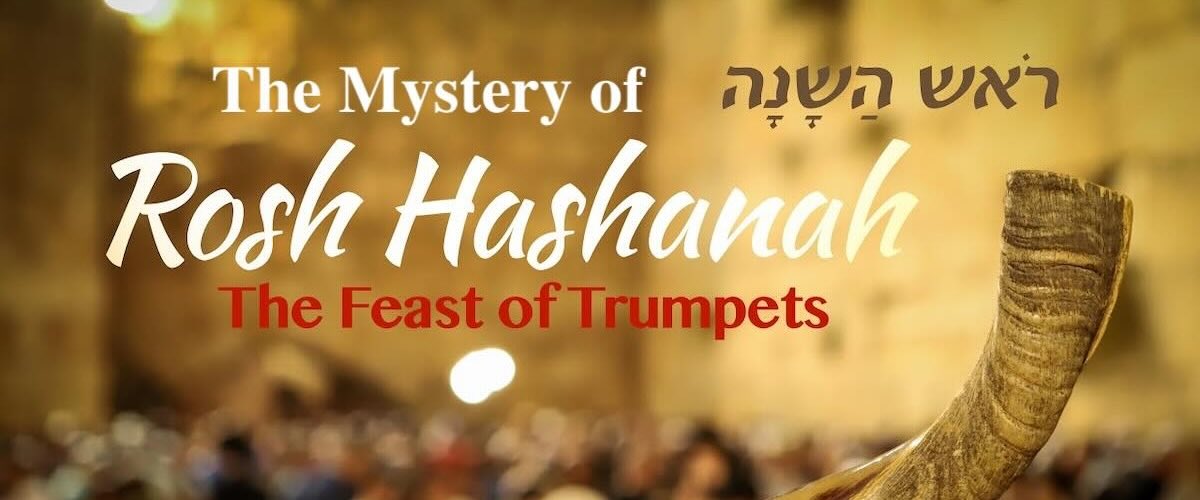
The Mystery of Rosh Hashanah (2025/5786)
Rosh Hashanah is celebrated as the Jewish New Year. This year, the first day of Rosh Hashanah is Tuesday, September 23rd with the initial celebration beginning the evening before on Monday, September 22nd. According to the Hebrew calendar, we are entering the year 5786, which dates back to the creation of Adam and Eve.
Rosh Hashanah literally means “head of the year.” The Hebrew phrase רֹאשׁ הַשָּׁנָ – Rosh Hashanah is only found once in the Hebrew Scriptures (Ezekiel 40:1). The actual day of Rosh Hashanah is the first day of the seventh month. Although this may seem like an oxymoron as it falls in the middle of the year, it actually aligns perfectly with the agricultural cycle in Israel (Ex. 23:16; 34:22; Lev. 25:9). It also corresponds well with the prophetic fulfillment of the Messiah’s two comings. I have explained these agricultural and Messianic connections to Rosh Hashanah in great detail in previous teachings; therefore, I will not go into further detail regarding these things here. If you are interested in a more thorough teaching on this topic of the biblical calendar, please watch my three-part teaching series: The Biblical Calendar
The other name for Rosh Hashanah is the Feast of Trumpets. We read about this biblical Appointed Time with its descriptive name in the Book of Leviticus:
Again the LORD spoke to Moses, saying, “Speak to the sons of Israel, saying, ‘In the seventh month on the first of the month you shall have a rest, a reminder by blowing of trumpets, a holy convocation. You shall not do any laborious work, but you shall present an offering by fire to the LORD.’” – Lev. 23:23-25 (NASB1995)
Out of the seven Appointed Times detailed in Leviticus 23, this day of blowing trumpets (shofar) is the most mysterious.
- What is the meaning of blowing trumpets on this first day of the seventh month?
- Is there any historical reason to remember this day?
- Are there any other Scriptures that help to explain this Appointed Time of blowing trumpets?
Outside of these three verses in Leviticus 23, very little explanation is provided in the biblical text regarding this first day of the seventh month. The LORD said plainly that this day was to be a day of rest, of blowing the trumpet (shofar – Lev. 25:9), of gathering together to worship Him, and a day to offer sacrifice to the LORD. There are no other details given for this day. The Feast of Trumpets remains a mysterious day on the biblical calendar.
- What is the purpose of this Appointed Time of blowing trumpets?
In Leviticus 23:24, the Hebrew word for the phrase “blowing of trumpets” is תְּרוּעָה – Teruah. Based on how this Hebrew word is used in the Scriptures, the rabbis teach that this day of blowing trumpets is a reminder that God alone is King. In Psalm 47:5, we see this same Hebrew word, Teruah, which seems to provide insight into the meaning of the Feast of Trumpets:
For the choir director. A Psalm of the sons of Korah.
O clap your hands, all peoples; shout to God with the voice of joy. For the LORD Most High is to be feared, a great King over all the earth. He subdues peoples under us and nations under our feet. He chooses our inheritance for us, the glory of Jacob whom He loves. Selah.
God has ascended with a shout, the LORD, with the sound of a trumpet. Sing praises to God, sing praises; sing praises to our King, sing praises. For God is the King of all the earth; sing praises with a skillful psalm. God reigns over the nations, God sits on His holy throne. The princes of the people have assembled themselves as the people of the God of Abraham, for the shields of the earth belong to God; He is highly exalted. – Psalm 47 (NASB1995)
The main message of this psalm is that there is One ultimate authority in the world, and He is the LORD. The LORD God is King over all of the earth and all nations are to worship Him. The most basic and fundamental understanding in the Scriptures, is that the sound of the trumpet, or the blowing of the shofar, is to remind us that the LORD God is King over all the earth.
Psalm 47 is attributed to “the sons of Korah” (vs. 1). It is especially powerful to recall the story of Korah and his sons as we consider the message of Psalm 47 declaring the LORD as King over all the earth. Korah is the one who led the rebellion of the leaders of Israel against Moses and Aaron (Num. 16). Korah challenged the authority of Moses and Aaron and called the people to rise up against them. In the end, the LORD judged Korah and all those who stood with him against Moses by causing the earth to open its mouth and swallow them alive, bringing their lives to a sudden end (Num. 16:23-33).
Korah and all of those who stood with him in this rebellion were killed by the LORD; however, we read a different outcome for Korah’s sons in the following account found later in the Book of Numbers:
The sons of Eliab: Nemuel and Dathan and Abiram. These are the Dathan and Abiram who were called by the congregation, who contended against Moses and against Aaron in the company of Korah, when they contended against the LORD, and the earth opened its mouth and swallowed them up along with Korah, when that company died, when the fire devoured 250 men, so that they became a warning. The sons of Korah, however, did not die. – Num. 26:9-11 (NASB1995)
The sons of Korah did not die when the LORD judged those who rose up against the leaders of Israel. The sons of Korah had a choice to make that day and they chose Not to stand with their father. Instead of siding with the rebels, including their own father, they acknowledged God’s appointment of Moses and Aaron over the nation of Israel and respected the authority which the LORD Himself established at that time.
The verses of Psalm 47 reveal to us that the sons of Korah understood that the LORD is God and that He is the ultimate authority over all the earth. It is helpful to read Psalm 47 in the context of what they had witnessed regarding human authority and the power of God:
For the LORD Most High is to be feared, a great King over all the earth. He subdues peoples under us and nations under our feet. – Ps. 47:2-3 (NASB1995)
The sons of Korah saw the mighty power of God when He instantly destroyed over 250 leaders of Israel, including their own earthly father. The sons of Korah had great respect for the human authorities whom God instituted and they understood that the sound of the trumpet was used to proclaim that their is only One true God who rules over the nations:
God has ascended with a shout, the LORD, with the sound of a trumpet. Sing praises to God, sing praises; sing praises to our King, sing praises. For God is the King of all the earth; sing praises with a skillful psalm. God reigns over the nations, God sits on His holy throne. – Psalm 47:5-8 (NASB1995)
The LORD God alone is King of the earth and He alone is to be praised.
We are living at a time when many people are rising up against human authorities in this world, and thereby rising up against God Himself. It is as if there are a thousand rebellions of Korah occurring simultaneously in various nations on earth. There are some people in the world today who have great disdain for governing authorities and have chosen to rise up in order to lead violent rebellions against their leaders.
The Scriptures teach that governing authorities are established by God Himself:
Every person is to be in subjection to the governing authorities. For there is no authority except from God, and those which exist are established by God. Therefore whoever resists authority has opposed the ordinance of God; and they who have opposed will receive condemnation upon themselves. – Rom. 13:1-2 (NASB1995)
On this yearly reminder of Rosh Hashanah and the Feast of Trumpets, it is good to remember that there is One ultimate King over all the earth and He has established earthly authorities to govern nations. As the sons of Korah have written, let us rise up to worship the King of the earth with shouts of joy. While respecting earthly authorities, let us blow the trumpet and remember that the LORD alone is God and worship Him. Although mystery remains for this day of Rosh Hashanah and the Feast of Trumpets, it is always good and right to honor the LORD as King over the earth and to sing praises to our God.
May it be a good and blessed year for Israel and for all of the nations of the world as believers rise up to worship the King of Kings!
Thank you, Daniel!