Author Archive: Ner LeRaglai
Protected: The Walk of Faith
Posted on by Ner LeRaglai
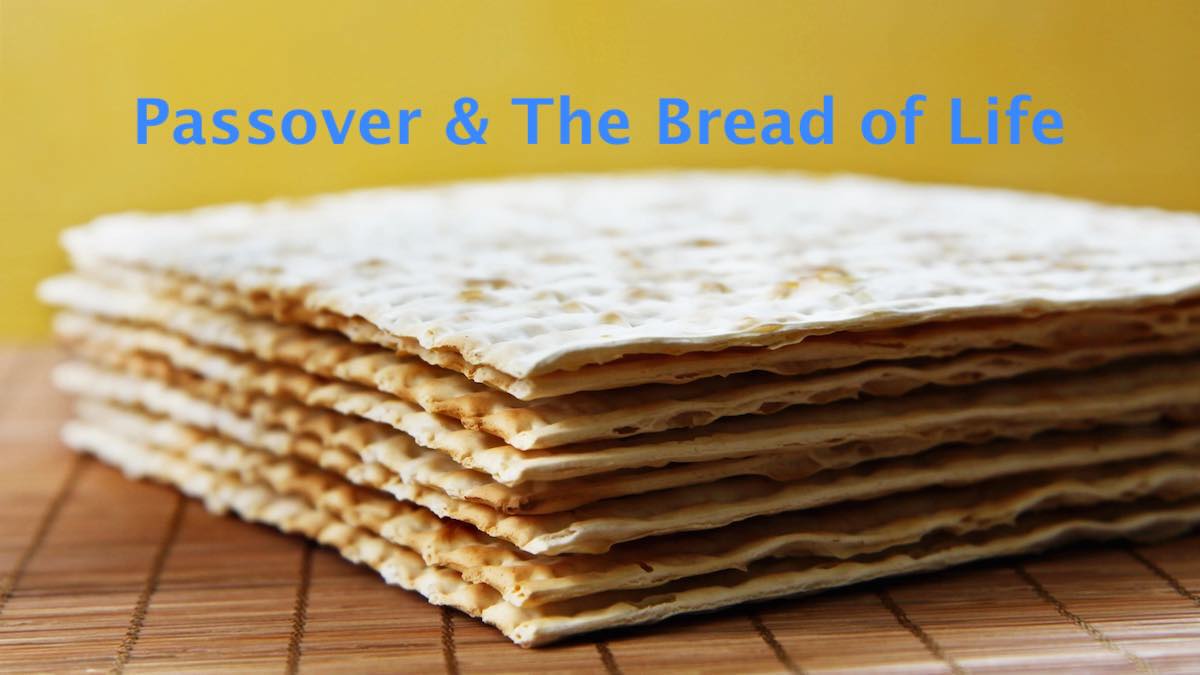
Passover & The Bread of Life
Posted on by Ner LeRaglai
This year (2026) Passover begins on Wednesday evening, April 1st. As I prepare to celebrate Passover in Jerusalem, I was reflecting on Yeshua’s words when He said, “I am the bread of life.” (John 6:48 – NASB)
-
What was Yeshua communicating when He declared, “I am the bread of life”?
-
Is there a connection between these words of Yeshua to Passover?
-
What was the context in which Yeshua made this statement?
John chapter six is a very long chapter containing 71 verses; however, the events detailed in it occurred over just two days. The context of John 6 is described for us in the first few verses of this chapter:
1 After these things Yeshua went away to the other side of the Sea of Galilee (or Tiberias). 2 A large crowd was following Him, because they were watching the signs which He was performing on those who were sick. 3 But Yeshua went up on the mountain, and there He sat with His disciples. 4 Now the Passover, the feast of the Jews, was near. 5 So Yeshua, after raising His eyes and seeing that a large crowd was coming to Him, said to Philip, “Where are we to buy bread so that these people may eat?” (John 6:1-5 – NASB)
Geographically, Yeshua and His disciples were in the north of Israel around the Sea of Galilee. We also read that it was during the season of spring as the Feast of Passover was near or soon approaching. Passover was the context and the majority of events in this chapter center on the significance of this biblical feast.
Crowds of people were following Yeshua because of the miracles that He was performing. It was as a result of these large crowds that Yeshua asked Philip where they could buy bread for the people. Philip then asked the question, “Where are we to buy bread so that these people may eat?” It was not only a question of the large quantity of bread needed to feed the crowds of people but, as they were approaching the time of Passover, regular bread would be difficult to find. In the days leading up to Passover, the Jewish people would have been cleaning out the leavened items from their homes and communities as Passover is intrinsically connected to the Feast of Unleavened Bread. The major event that immediately followed Philip’s question is what is known as the feeding of the 5,000: Yeshua took five loaves of bread and two fish from a boy in the crowd and fed all of the people with 12 baskets full of bread leftover (John 6:6-14).
The Bread Chapter
It is easy to compartmentalize the events recorded for us in the Bible while sometimes missing the bigger picture. For example, one could focus on the miracle that Yeshua performed by taking five barley loaves and two fish and fully satisfying the food needs of over 5,000 men to the exclusion of the dialogue that Yeshua had with the people the very next day. Continuing in John 6, however, we see how the subject of “bread” is a major focus until the end of the chapter.
Despite Yeshua’s best efforts to avoid the crowds, they chased after Him and eventually caught up to Him the next day on the other side of the Sea of Galilee:
25 And when they found Him on the other side of the sea, they said to Him, “Rabbi, when did You get here?” 26 Yeshua answered them and said, “Truly, truly, I say to you, you seek Me, not because you saw signs, but because you ate some of the loaves and were filled. 27 Do not work for the food that perishes, but for the food that lasts for eternal life, which the Son of Man will give you, for on Him the Father, God, has set His seal.” 28 Therefore they said to Him, “What are we to do, so that we may accomplish the works of God?” 29 Yeshua answered and said to them, “This is the work of God, that you believe in Him whom He has sent.” 30 So they said to Him, “What then are You doing as a sign, so that we may see, and believe You? What work are You performing? 31 Our fathers ate the manna in the wilderness; as it is written: ‘He gave them bread out of heaven to eat.’” 32 Yeshua then said to them, “Truly, truly, I say to you, it is not Moses who has given you the bread out of heaven, but it is My Father who gives you the true bread out of heaven. 33 For the bread of God is that which comes down out of heaven and gives life to the world.” 34 Then they said to Him, “Lord, always give us this bread.”
35 Yeshua said to them, “I am the bread of life; the one who comes to Me will not be hungry, and the one who believes in Me will never be thirsty. 36 But I said to you that you have indeed seen Me, and yet you do not believe.” (John 6:25-36 – NASB)
Such a fascinating dialogue! Instead of answering the question that the crowd asked Him regarding when He arrived, Yeshua said that the only reason they were seeking Him was because of the loaves of bread they ate (John 6:26). We then read the word “bread” six more times just in the verses quoted above. Yeshua tried to challenge the people to seek the eternal gift of God which is found in the Son of Man but the people could not break free from their quest for physical bread.
When the people understood that He was telling them that He is the Son of Man who was sent from heaven, they asked for a sign like “the manna in the wilderness” (John 6:31). Yeshua kept trying to get the people to see that something greater than manna from heaven was in their midst. He then declared for the first time, “I am the bread of life” (John 6:35).
-
What was Yeshua communicating when He made this statement about being “the bread of life”?
I believe it is clear from the context that Yeshua was taking the basic function of bread as a source of sustaining human life and declaring that He was and is the source of spiritual life, eternal life. He stated this plainly in verse 27, “Do not work for the food that perishes, but for the food that lasts for eternal life, which the Son of Man will give you, for on Him the Father, God, has set His seal.”
Yeshua attempted to convince the crowds of people that He indeed was the Son of Man whom the Father in heaven sent into the world and that those who believed in Him would be granted eternal life. Yeshua declared that He was the spiritual provision (bread) of God which was available to all people.
-
Was Yeshua’s statement declaring “I am the bread of life” simply metaphorical or was it to be taken literally?
I believe that most people who read John 6 would understand Yeshua’s declaration of being “the bread of life” to be metaphorical; however, we read Yeshua’s continued dialogue with the people a few verses later and we must reconsider:
47 “Truly, truly, I say to you, the one who believes has eternal life. 48 I am the bread of life. 49 Your fathers ate the manna in the wilderness, and they died. 50 This is the bread that comes down out of heaven, so that anyone may eat from it and not die. 51 I am the living bread that came down out of heaven; if anyone eats from this bread, he will live forever; and the bread which I will give for the life of the world also is My flesh.” 52 Then the Jews began to argue with one another, saying, “How can this Man give us His flesh to eat?” 53 So Yeshua said to them, “Truly, truly, I say to you, unless you eat the flesh of the Son of Man and drink His blood, you have no life in yourselves. 54 The one who eats My flesh and drinks My blood has eternal life, and I will raise him up on the last day. 55 For My flesh is true food, and My blood is true drink. 56 The one who eats My flesh and drinks My blood remains in Me, and I in him. 57 Just as the living Father sent Me, and I live because of the Father, the one who eats Me, he also will live because of Me. 58 This is the bread that came down out of heaven, not as the fathers ate and died; the one who eats this bread will live forever.” (John 6:47-58 – NASB)
Yeshua spoke in a straight forward and direct manner regarding being the “living bread” which came down out of heaven. He also proclaimed that those who want to live forever must eat His flesh and drink His blood (John 6:53-55).
-
How can we make sense of Yeshua’s words as recorded in John 6?
-
Did Yeshua really expect the crowds of people to eat His flesh and drink His blood?
If you are struggling to fully grasp Yeshua’s words, you are not alone. Some of His own disciples failed to understand what He was communicating at that time (John 6:60) and many of His disciples abandoned Him: “As a result of this many of His disciples left, and would no longer walk with Him.” (John 6:66). For those who appreciate numerology, the reference of “666” for this verse is a good reminder that it is not wise to walk away from Yeshua!
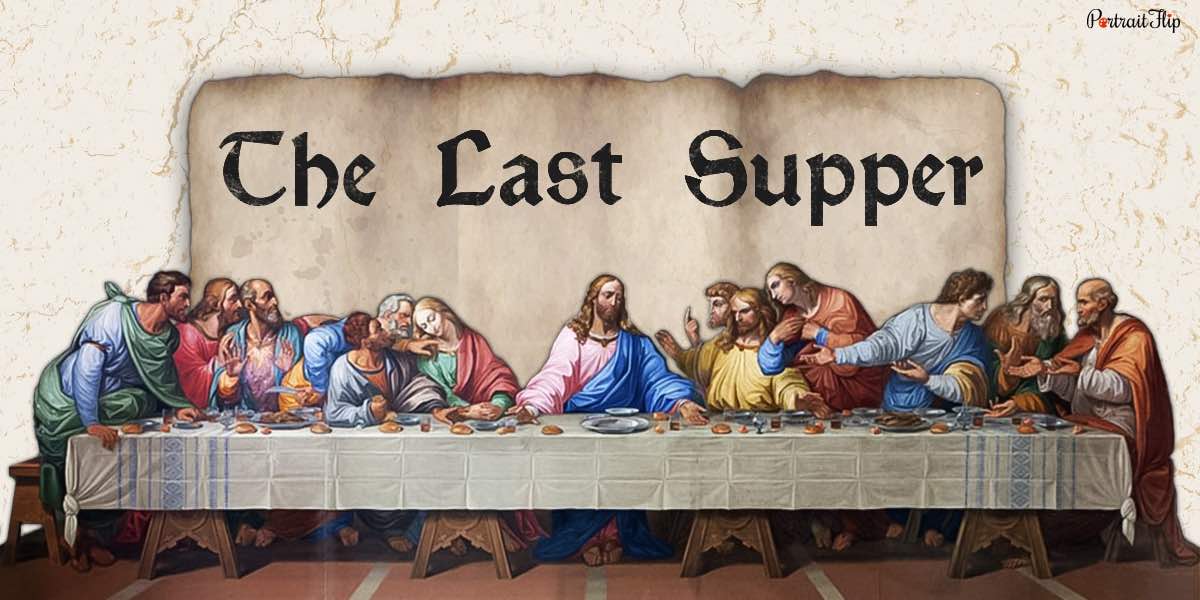
As we have the privilege today to read the New Testament in its fulness, I believe the answers to the above questions regarding eating His flesh and drinking His blood are best understood in the context of this chapter which occurred in the days leading up to the Feast of Passover (John 6:4). Although we know that it would be at least another year before the Passover when Yeshua ate the Last Supper with His disciples (John 13) and was crucified as the Lamb of God (John 19), the context in John 6 of the Passover informs us what Yeshua meant by the phrase, “The one who eats My flesh and drinks My blood has eternal life,…” (John 6:54).
When Yeshua instituted the New Covenant on the evening of Passover He distinctly spoke of His body and blood in terms of the bread and wine used for the Feast of Passover, as we read in Matthew’s gospel:
26 Now while they were eating, Yeshua took some bread, and after a blessing, He broke it and gave it to the disciples, and said, “Take, eat; this is My body.” 27 And when He had taken a cup and given thanks, He gave it to them, saying, “Drink from it, all of you; 28 for this is My blood of the covenant, which is being poured out for many for forgiveness of sins. 29 But I say to you, I will not drink of this fruit of the vine from now on until that day when I drink it with you, new, in My Father’s kingdom.” (Matt. 26:26-29 – NASB)
The New Covenant was established during a traditional Passover Seder when lamb was still the main course eaten at the table and it was accompanied by unleavened bread (matzah) and four glasses of wine. For some reason, the New Testament does not use the term “matzah” or “unleavened bread” except when speaking distinctly about the “Feast of Unleavened Bread” or in a spiritualized concept in 1 Corinthians 5:7-8. However, we know that Yeshua used matzah, the unleavened bread at Passover, to represent His sinless body and that He took the cup of wine after the meal (most likely the third cup, the cup of redemption) to represent His blood which would be poured out on the cross in less than 24 hours from that Last Supper meal at Passover.

In putting all of these details together, we can better understand what Yeshua meant in John 6 when He said, “The one who eats My flesh and drinks My blood has eternal life,…” (John 6:54). Yeshua later took the simple elements of Passover, matzah bread and a cup of wine, to represent His body and blood. When Yeshua proclaimed “I am the bread of life” (John 6:48), He was declaring that His body would be sacrificed as the Passover Lamb and that the unleavened matzah bread of Passover would represent His sinless body. Every time we partake of the communion service with the elements of unleavened bread and wine, we not only proclaim His death until He comes again (1 Cor. 11:26) but we also confess that Yeshua is the Son of God, the true bread of life.
Daniel Goldstein
NASB: New American Standard Bible®, Copyright © 1960, 1971, 1977, 1995, 2020 by The Lockman Foundation. All rights reserved. – The Hebrew name “Yeshua” is substituted for “Jesus” for all Scripture quotations.
The Battle Belongs to the LORD
Posted on by Ner LeRaglai
The Battle Belongs to the LORD (1 Sam. 17:47)
These past three weeks have been challenging. The war involving Israel, the USA, and Iran continues to take a huge toll on the entire region. The purpose of this short article is not to provide a war update, but rather for me to personally share what I’m experiencing as one living in Jerusalem and how I perceive the events of today from a biblical and spiritual perspective.
While the Israeli and US militaries continue to work in tandem in order to destroy the Iranian regime with targeted strikes, Iran launches missiles daily at Israeli population centers with no specific targets except to kill as many innocent people as possible. Israel works hard to protect all of its citizens but some missiles make it through the defense systems and debris from the missiles also causes damage and harm.
On top of the daily missile attacks from Iran, Hezbollah has been attacking northern Israel from southern Lebanon. Hezbollah is an Islamic militant proxy organization which has been heavily funded by Iran. The Israeli military is currently fighting battles on two fronts: with Hezbollah in Lebanon and with the Islamic regime in Iran.
Daily life in Israel has been significantly interrupted by this ongoing war. Half of school-aged children are at home and, depending on the safety situation, citizens are returning to work. Whenever there is a missile attack, a siren sounds in a specific region of Israel and those in that region must seek a safe location, like a bomb shelter if there is one nearby. Jerusalem has been fairly well protected during this war with a minimal amount of sirens, approximately 3-5 times per day. Last week the sirens and missiles seemed to be decreasing but this week they are rising again. Overnight we had three back to back missile attacks from midnight until half past midnight.
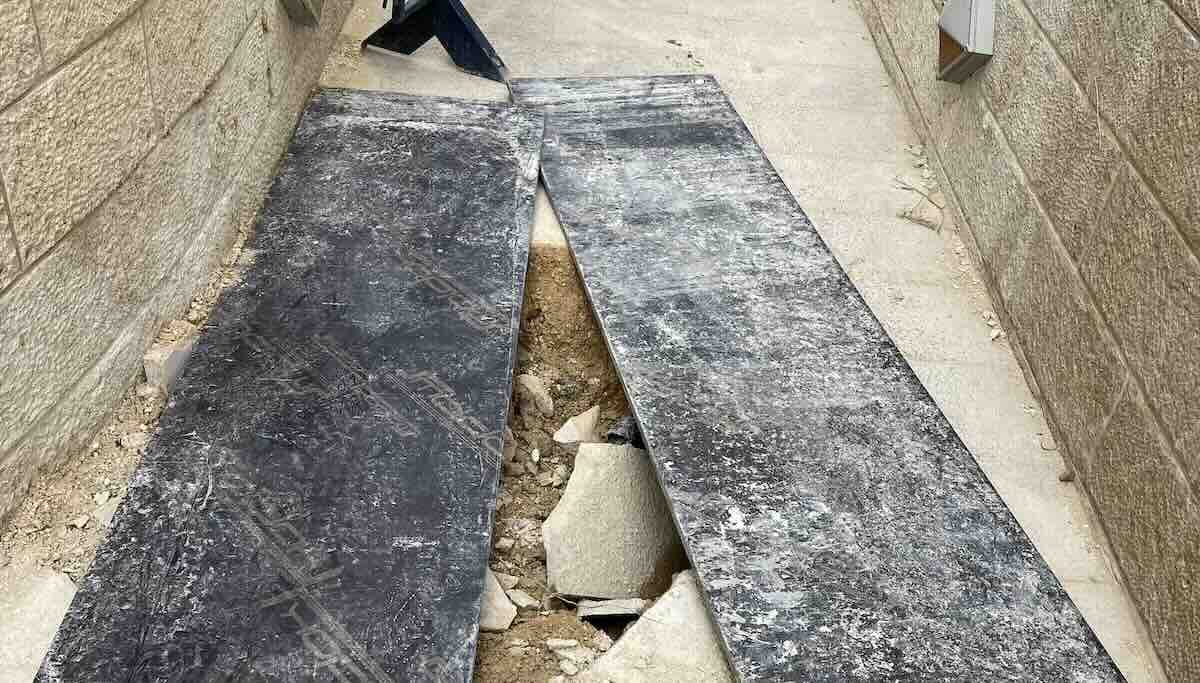
This past Sabbath day (Saturday, March 14th), a warhead from an Iranian missile hit an apartment building next to the building where I live in Jerusalem.
Thankfully, the warhead only clipped the edge of the roof of the apartment building and then fell in between two buildings without exploding.
No one was killed and no one was hurt in this encounter. Thankfully, all residents were in their bomb shelters at the time of the attack. Local authorities immediately secured the area, disabled the warhead, and removed it from the residential area. Thank God for His protection in situations like this.
One verse that I have been daily declaring and praying since the beginning of this war is Isaiah 54:17, which reads as follows:
“No weapon that is formed against you will prosper; and every tongue that accuses you in judgment you will condemn. This is the heritage of the servants of the LORD, and their vindication is from Me,” declares the LORD. (NASB1995)
This verse contains a beautiful promise for those who are considered the servants of the LORD. Although English translations generally read “No weapon that is formed against you will prosper;…,” the original language actually contains a different nuance. The Hebrew reads כָּל-כְּלִי יוּצַר עָלַיִךְ, לֹא יִצְלָח – Kol Klee Yuztar Alayik Lo Yitzlak and a literal translation of this phrase is “Every weapon formed against you will not succeed.” The overall meaning is the same as the majority of translations but the negative inference is moved to the success of “every weapon” formed against God’s servants.
Isaiah 54:17 contains a powerful promise that is helpful to declare in times of battle. I’m very grateful that the warhead that fell 100 meters (300 feet) from where I live did not succeed!
As this Middle East war continues to rage on, various news outlets are trying to place the blame on one country or the other. Who is responsible for this war: Israel, the USA, or Iran?
God is the ultimate judge and I will let Him make the final decision regarding this question; however, one thing I know for sure is that the Islamic regime in Iran has consistently cursed and spoken evil of the USA and Israel for 47 years calling the USA the “great satan” and Israel “the little satan.” This reminds me of the second part of Isaiah 54:17, “‘…and every tongue that accuses you in judgment you will condemn. This is the heritage of the servants of the LORD, and their vindication is from Me,’ declares the LORD.”
It seems to me that the accusations by the Islamic Republic of Iran are now being condemned in judgment.
Although the war in the Middle East is very real and physical with bombs and missiles going both ways, there is also a spiritual side to this battle. Just this morning I read the famous battle between Israel and the Philistines in 1 Samuel 17. The climax of that particular battle occurred when a young shepherd boy named David volunteered to fight the war hero of the Philistines, Goliath, who is simply called “the Philistine” in the few verses I am quoting here from this biblical narrative:
42 When the Philistine looked and saw David, he was contemptuous of him; for he was only a youth, and reddish, with a handsome appearance. 43 So the Philistine said to David, “Am I a dog, that you come to me with sticks?” And the Philistine cursed David by his gods. 44 The Philistine also said to David, “Come to me, and I will give your flesh to the birds of the sky and the wild animals.” 45 But David said to the Philistine, “You come to me with a sword, a spear, and a saber, but I come to you in the name of the LORD of armies, the God of the armies of Israel, whom you have defied. 46 This day the LORD will hand you over to me, and I will strike you and remove your head from you. Then I will give the dead bodies of the army of the Philistines this day to the birds of the sky and the wild animals of the earth, so that all the earth may know that there is a God in Israel, 47 and that this entire assembly may know that the LORD does not save by sword or by spear; for the battle is the LORD’s, and He will hand you over to us!” – 1 Sam. 17:42-47 (NASB)
Similar to the Philistines of old, the Islamic Republic of Iran seeks to defy the God of Israel and is set on destroying the people of Israel. Just as David declared 3,000 years ago, it is not the weapons of war (sword, spear, or saber) that determine who will be victorious in battle but all authority rests in the LORD of hosts, the God of the armies of Israel.
The accounts that are recorded for us in the Bible are excellent reminders of what it means to live a normal life on this earth while walking in faith with the God of Abraham, Isaac, and Jacob. There is great encouragement in the simple truth that “the battle is the LORD’s” (1 Sam. 17:47). The Hebrew for this phrase is כִּי לַיהוָה הַמִּלְחָמָה – Ki LaAdonai HaMilchamah, which can also be translated as “the battle belongs to the LORD!“
Daniel Goldstein
God Reigns Over the Nations
Posted on by Ner LeRaglai
God Reigns Over the Nations (Psalm 47)
The United States and Israel jointly attacked the Islamic Republic of Iran on the Sabbath day (Saturday), February 28, 2026. I’m writing this article on Friday, March 6, 2026. Today is now the seventh day of this regional conflict.
The world is being shaken by war once again. Although this war is mostly focused in the Middle East, from Israel to Iran, the ripple effects of this war are being felt in nearly every country on Planet Earth. Global shipping and the airline industry, both of which connect the nations of the world, are being interrupted. Beyond the inconvenience of the transport of goods, higher oil prices, and the cancellation of flights, the daily schedule of millions of people is being put on hold until peace and stability are restored.
Although Israel has a relatively small population of about 10 million people, Iran has a population of about 90 million people. Then there are all of the peoples in-between these two nations. The Arab peoples from Egypt to Iraq (including all of the Arabian Peninsula, Jordan, Lebanon, Syria and the Arabs in Israel) total about 300 million people. This little Middle Eastern war is directly affecting approximately 400 million people.
Every country is experiencing this war to a different degree. Iran is at the center of this war and the people of that nation are certainly being impacted with the greatest devastation and the highest degree of destruction together with tremendous loss of life. My heart breaks for the families who have already lost tens of thousands of loved ones by the hands of their own repressive leaders and now there is certainly more death and destruction. It is difficult to witness war.
Life in Israel During the War
I live in Jerusalem. I was planning to fly back to the US on Tuesday, March 3rd but my plans were suddenly changed when this war broke out and Israel closed its international airport.
The Islamic clerics of Iran hate the United States but they hate the people and nation of Israel more than anything. Their sole mission is to wipe Israel off the face of the earth. As soon as the war started on Saturday, the sirens started to ring out in Israel as a result of the ballistic missiles that Iran sent to destroy us.
The air over Israel has been filled with the sounds of missiles, sirens, and defensive systems throughout this past week. The reality of war reminds me that in one instant of time innocent life can be taken from this earth. Thankfully, Israel and the US are providing excellent defenses against the continued attack on Israel. The majority of the missiles that Iran has fired at the nation of Israel have either been intercepted in the skies above or landed in barren areas. There was one missile that got through and hit a home in Beit Shemesh, Israel. I believe nine people were killed from that one missile. The other danger from ballistic missiles is that after they are intercepted in the skies, the body of the missile falls to the ground. It is for this reason that we are directed to stay in our bomb shelters not only when the missiles are incoming, but then for 10-15 minutes after they are intercepted so that we can have confidence that the destroyed missile will not fall on our homes or apartment buildings.
Since the beginning of the war on Saturday, Feb. 28th, the Israeli government has issued a stay at home order except for necessary activities. Adults have not been going to work, children have not been going to school, and formal gatherings have been cancelled for the safety of everyone. Today, Thursday, March 5th, is the first day that some sense of normalcy is starting to return to life in Israel. The missile attacks are becoming fewer and fewer and we are starting to be able to return to some regular activities.
Reflections on War-time
I look back on this past week and wonder what I did over the course of these five to six days. It is nearly impossible to accomplish meaningful tasks with constant interruptions as we are forced to focus on simply surviving and doing that which is absolutely necessary on a daily basis.
During my daily devotional time yesterday morning, I read Psalm 47. I read it in English and then I read it in Hebrew. I listened to it in Hebrew and then listened to it in again and again as I followed along in the Hebrew text. This psalm is only 9 verses in English or 10 verses in Hebrew, including the superscript, but it has a powerful message that declares the absolute authority of the LORD God.
Psalm 47 is a simple psalm written by “the sons of Korah.” The Tree of Life Version, which I have included below, is a more direct translation from the Hebrew text and uses certain Hebrew words like “Adonai” for the Name of the LORD and the word “Elyon” which means “exalted.” The phrase, “Adonai Elyon” means “Exalted LORD.” The following is the text of Psalm 47:
1 For the music director, a psalm for the sons of Korah. 2 Clap your hands, all you peoples! Shout to God with the voice of joy! 3 For Adonai Elyon is awesome, a great King over all the earth. 4 He subdues peoples under us, and nations under our feet. 5 He chooses our inheritance for us, the glory of Jacob whom He loved. Selah
6 God is gone up amidst shouting, Adonai amidst the sound of the shofar. 7 Sing praises to God, sing praises! Sing praises to our King, sing praises! 8 For God is the King of all the earth. Sing praises with a skillful song. 9 God reigns over the nations. God sits upon His holy throne. 10 The princes of the peoples are gathered as a people of the God of Abraham. For the shields of earth belong to God—He is greatly exalted! – (TLV*)
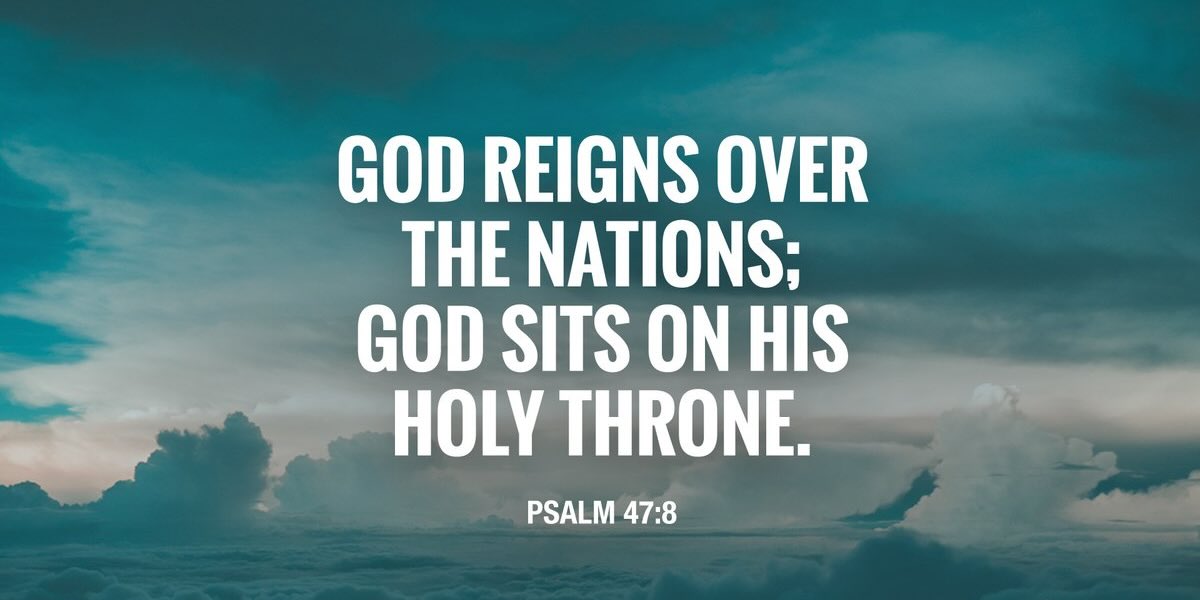
God reigns over the nations and He sits on His holy throne (vs. 9). In times of global chaos and uncertainty, especially during a time of war, it is good to worship the LORD and remember who He is. He is Adonai Elyon, the “Exalted LORD.”
Verse 7 admonishes us with these words, “Sing praises to God, sing praises! Sing praises to our King, sing praises!” I started practicing this every time the siren sounds to warn us of incoming missiles. As soon as I hear the siren, I grab my guitar and start worshiping the LORD. The amazing thing is that ever since I started doing this, Jerusalem has been missile free. Although the sirens have sounded, there has not been the sound of the intercepting rockets or exploding missiles. Praise God!
With hundreds of missiles and drones flying over the Middle East in these days, it is good to know that “the shields of earth belong to God” and that “He is greatly exalted!” (Vs. 10)
It is easy to become distracted and depressed when it seems like the world is spinning out of control. In the midst of the current uncertainty and ongoing war, it is encouraging to remember that, “God reigns over the nations” and that “God sits upon His holy throne.” (Vs. 9)
Daniel Goldstein
*Scripture taken from the Tree of Life Version 2014
Protected: Deception & The Mercy of God
Posted on by Ner LeRaglai
Protected: The Unplanned Blessing
Posted on by Ner LeRaglai
Protected: The Well of Living Water
Posted on by Ner LeRaglai
Protected: Hearing God’s Voice
Posted on by Ner LeRaglai